Dog Breed Guide
Puli
Profile
- Size
- Small - Medium
- Country of origin
- Hungary
- Origin
- Ancient
- Bred for
- Sheep herding
- Height
- male 39 - 45cm (15 - 18in), female 36 - 42cm (14 - 17in)
- Weight
- male 13 - 15kg (29 - 33lb), female 10 - 13kg (22 - 29lb)
- Life span
- 12 - 16 years
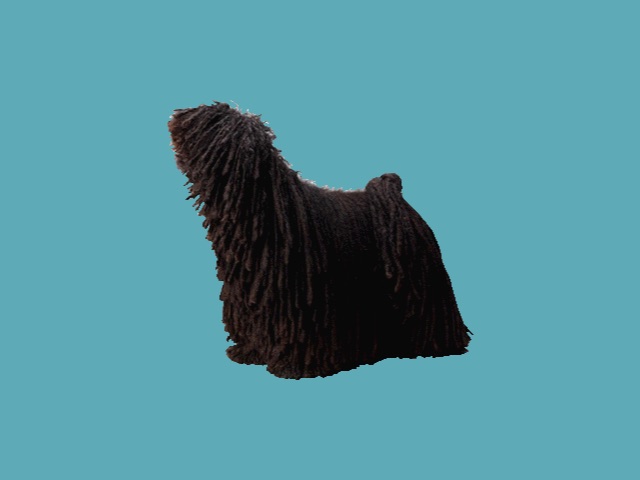
A herding dog famous for the rope-like cords that cover its whole body. Puppies have fluffy curls, but as they grow the hair clumps together into cords that, in adults, can reach the floor. Black is the classic color, and there are also white, gray and fawn.
Under the cords hides a surprisingly small, light body. The Puli is very smart, active and fiercely loyal to its family. It is wary of strangers and a watchdog that barks to sound the alarm.
It needs plenty of exercise and a place where it can move around a lot every day. The cords do not separate neatly on their own, so the clumps must be split by hand. They also take a long time to dry, so dry the coat thoroughly after a bath.
Good to know
The Puli is thought to descend from herding dogs brought to Hungary more than 1,000 years ago by the Magyars, who migrated from Central Asia. On the Hungarian Great Plain, the puszta, the two breeds divided the work brilliantly: the large Komondor mainly guarded the flock from wolves at night, while the small, nimble Puli drove and gathered the sheep by day.
The corded coat protects the dog from both the bitter winters and the hot summers of the puszta and lets almost no water through. When a Puli was among the sheep, it was said to be impossible to tell where the dog was.
In 1935 the US Department of Agriculture imported Pulik from Hungary to study herding dogs. The research was abandoned in the turmoil of World War II, and the dogs were given to fanciers, which is how the breed began to spread in the United States.