Dog Breed Guide
Pug
Profile
- Size
- Small
- Country of origin
- China
- Origin
- Ancient
- Bred for
- Companion
- Height
- 25 - 28cm (10 - 11in)
- Weight
- 6.3 - 8.1kg (14 - 18lb)
- Life span
- 12 - 15 years
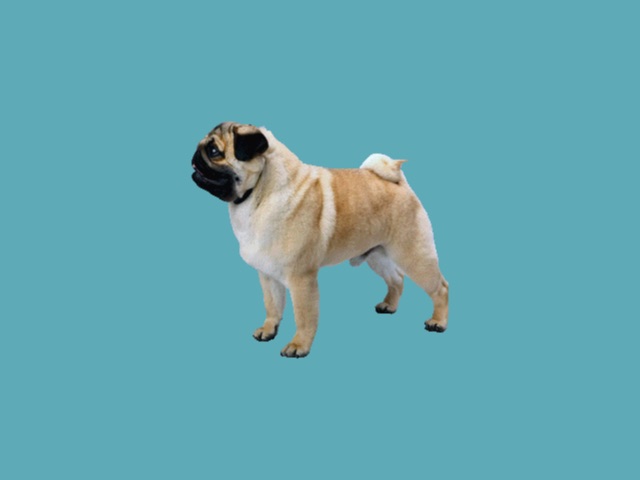
A wrinkled round face, large, soulful eyes, a short pushed-in nose and a tightly curled tail are the Pug's hallmarks. It is small but solid and compact. The short, smooth coat comes in fawn (with a black mask), black, silver and apricot.
Cheerful and full of charm, the Pug adores its family and always wants to be by their side. It is a natural at making people laugh with its comical antics and has long been compared to a clown. It needs relatively little exercise and suits indoor life.
Because its short nose makes breathing hard, it is extremely sensitive to heat and at risk of heatstroke. Many Pugs snore. Its large, prominent eyes are easily injured, and dirt collects in its wrinkles, so daily care is essential. It is also a glutton that gains weight easily.
Good to know
Its ancestors are thought to be small dogs cherished by emperors at the court of ancient China. Dogs whose forehead wrinkles looked like the Chinese character for "king" (王) were especially prized, and fans call this the "prince mark."
After Pugs reached Holland in the 16th century, a legend arose about Pompey, the dog of William I of Orange, the father of Dutch independence. One night in 1572, Pompey is said to have barked to wake his master as Spanish soldiers crept up to attack him in his sleep, saving his life. From then on the Pug became the emblematic dog of the House of Orange, and when William III later became King of England, Pugs wearing orange ribbons are said to have been brought to his coronation.
Napoleon's wife Joséphine also doted on her Pug, Fortuné. While she was imprisoned during the French Revolution, she is said to have hidden notes in Fortuné's collar when he visited, to exchange messages with her family outside.