Dog Breed Guide
Dalmatian
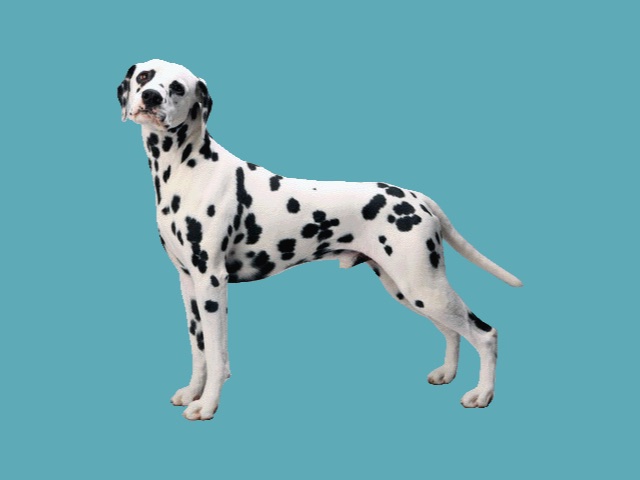
Profile
- Size
- Medium - Large
- Country of origin
- Croatia
- Origin
- Around the 14th century
- Bred for
- Carriage dog, Watchdog, Companion
- Height
- male 56 - 62cm (22 - 24in), female 54 - 60cm (21 - 24in)
- Weight
- male 27 - 32kg (60 - 71lb), female 24 - 29kg (53 - 64lb)
- Life span
- 11 - 13 years
A sleek dog with crisp black or liver spots on a white coat. Puppies are born pure white, and the spots gradually appear from about two weeks of age. Every dog's spots are different in placement and shape; no two Dalmatians have the same pattern.
The Dalmatian has tremendous stamina and a history of running for miles alongside carriages. It is bright and friendly but sensitive, and does better when taught with praise than with scolding. It needs plenty of exercise every day, and without it, mischief tends to increase.
The breed is known for a relatively high rate of congenital deafness; one study found that about 30 percent of dogs were deaf in one or both ears. It also has difficulty breaking down uric acid, which makes it prone to urinary stones.
Good to know
The name comes from Dalmatia, a region on Croatia's Adriatic coast. Croatia is said to have a record from 1374 describing this dog, and the breed is treasured as the national dog.
In 18th- and 19th-century Britain it was prized by the aristocracy as a "carriage dog" that ran beside carriages to clear the way and guarded them when they stopped. In the United States it ran ahead of horse-drawn fire engines, and it is still a beloved mascot of fire stations today. A Dalmatian also rides along on Budweiser's famous wagon pulled by giant Clydesdale horses.
The tendency to form stones comes from a gene shared by the entire breed. In 1973 an American researcher made a single cross with a Pointer and then bred only to Dalmatians, producing "LUA Dalmatians" that are less prone to stones. After much debate, the American Kennel Club agreed in 2011 to register their descendants as purebred Dalmatians.