Dog Breed Guide
Alaskan Malamute
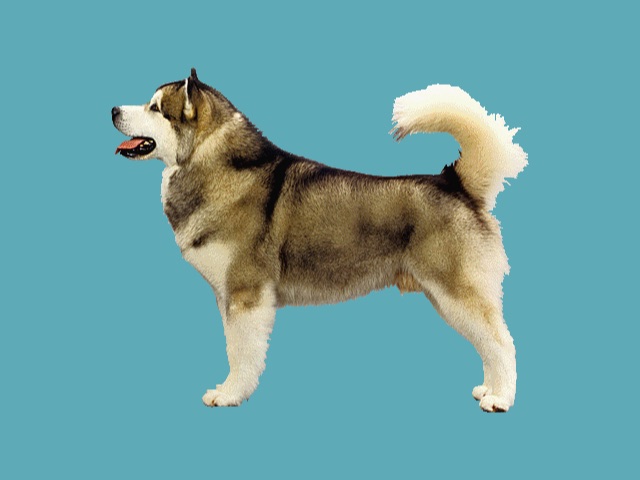
Profile
- Size
- Large
- Country of origin
- United States (Alaska)
- Origin
- Ancient
- Bred for
- Sled pulling, Freighting
- Height
- male about 64cm (25in), female about 58cm (23in)
- Weight
- male about 38kg (84lb), female about 34kg (75lb)
- Life span
- 10 - 14 years
A powerful sled dog with a solid, heavy-boned body and a thick, dense double coat. Its face has cap-like or mask-like markings, and it carries its plumed tail over its back. Colors include gray and white, black and white, and red and white.
It resembles the Siberian Husky but is a size larger, and rather than speed it excels in the strength and endurance to haul heavy loads over long distances. The Malamute loves people and is cheerful, but it is independent and stubborn, so training takes patience. It does not make much of a watchdog.
It is extremely tolerant of cold but hates heat. It needs a great deal of exercise and is one of the heaviest-shedding breeds of all. It also tends to dig and howl.
Good to know
This dog lived alongside the Mahlemiut, an Indigenous people of the northwestern coast of Alaska, and the breed's name comes from theirs. The Mahlemiut relied on these dogs as precious partners, trusting them to help hunt large game, haul heavy loads and even watch over children.
Its strength and resistance to cold were relied on in the polar exploration of the 20th century as well. Malamutes accompanied Admiral Richard Byrd's expeditions to Antarctica, and in World War II they worked in Greenland as search and rescue dogs and as pack dogs carrying weapons and ammunition.
In 2010 it was named the state dog of Alaska. Schoolchildren in Anchorage are said to have helped with the campaign through a class research project.