Dog Breed Guide
Gordon Setter
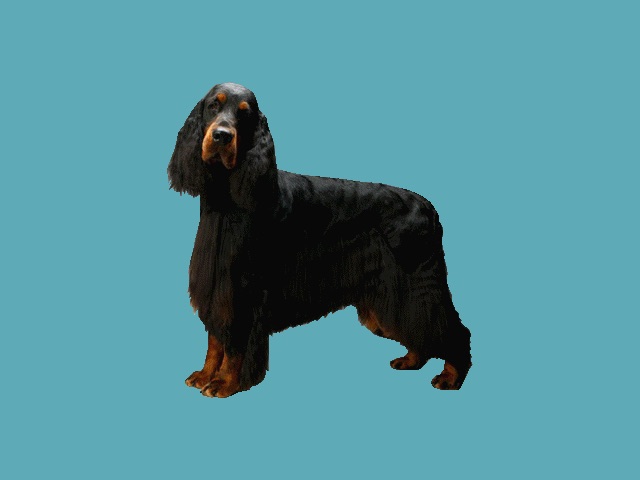
Profile
- Size
- Large
- Country of origin
- United Kingdom (Scotland)
- Origin
- Around the 17th century
- Bred for
- Bird hunting
- Height
- male about 66cm (26in), female about 62cm (24in)
- Weight
- male 25 - 36kg (55 - 79lb), female 20 - 32kg (44 - 71lb)
- Life span
- 12 - 13 years
The largest and most solidly built of the setters, with a glossy coal-black coat and vivid chestnut (tan) markings on the brows, muzzle, chest and legs. Long feathering grows on the ears, chest, legs and tail.
The Gordon is smart, loyal and deeply devoted to its family. It is more settled than other setters and a little cautious with strangers, so it also has the makings of a watchdog. On the other hand, it takes a long time to settle down as an adult and is boisterous as a puppy.
It has outstanding endurance and can range over the hunting field all day long. Its exercise needs are very high, so daily time for a good run is essential. The long feathering needs frequent brushing.
Good to know
The breed is named after the 4th Duke of Gordon, who lived at Gordon Castle in Scotland. In the early 19th century the Duke kept many setters in the castle kennels and played a major role in developing the breed. Black, white and tan dogs were common at the time, but black and tan dogs later came to be preferred, and for a long time the breed was called the Black and Tan Setter.
In 1842 the American fancier George Blunt imported two dogs, Rake and Rachel, from the Duke of Gordon's kennels and introduced the breed to America. The female, Rachel, is said to have been given to Daniel Webster, the famous statesman of the day.
The American Kennel Club recognized the breed as the Gordon Setter in 1892. The Kennel Club in Britain officially adopted the name only in 1924.